Imagine getting to test-drive your vision before committing to it. That's what makes the Light Adjustable Lens different from every other lens used in cataract surgery or refractive lens exchange. After your procedure, you work with your doctor to fine-tune your sight until it's exactly what you want.
This means you get to experience clear vision tailored to your life.
The Light Adjustable Lens is the only lens that can be customized after it's been placed in your eye, giving you control over your final vision outcome. It's made from a special material that responds to ultraviolet light, allowing the lens to change shape and alter your vision.
After your eyes heal from the initial procedure, your surgeon can make adjustments over several weeks to dial in the sharpest, clearest sight possible. Rather than hoping for the best based on pre-surgery measurements, you get to experience your vision options firsthand and choose what works best for how you live.
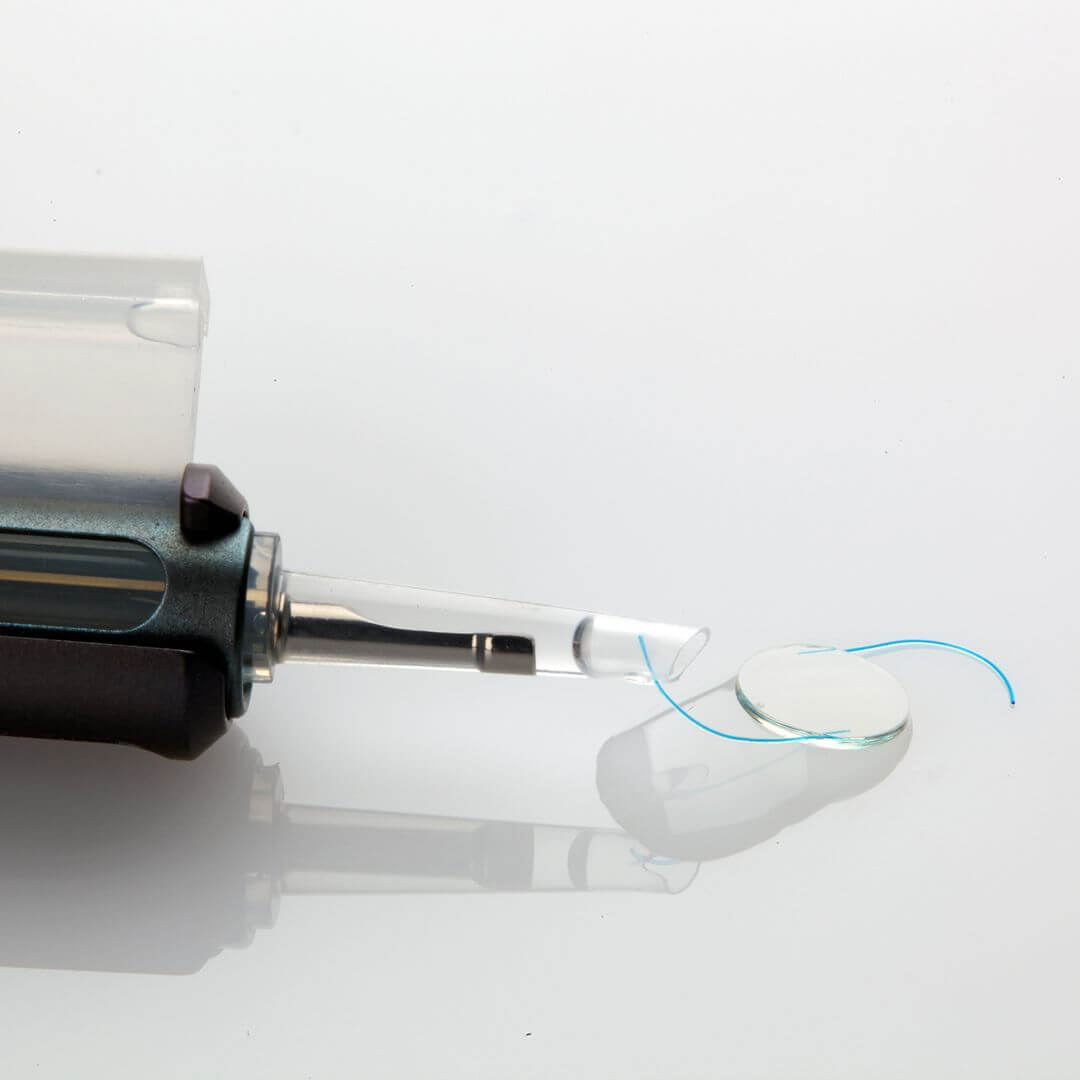
The LAL works through a two-step process. First, your surgeon removes your natural lens and replaces it with the Light Adjustable Lens, just like traditional cataract surgery. The procedure itself is quick, comfortable, and typically takes less than 20 minutes.
About three weeks after surgery, once your eye has healed, you will return for light treatment sessions. These are completely painless appointments where your doctor uses a special device to deliver controlled UV light to your lens.
This light actually reshapes the lens material, changing its focusing power. You might need two to four of these quick treatments, spaced a few days apart, until your vision matches what you're hoping to achieve.
Between sessions, you'll test out your sight in the real world by performing your normal activities like reading, driving, and using your phone, to see how it feels. Once you and your eye doctor land on your ideal vision, one to two final treatments will lock everything in place permanently.
Recovery follows the same timeline as standard cataract surgery, with two crucial differences: UV protection and periodic light treatment sessions. After your lens is implanted and until your final lock-in treatment, you'll need to wear special UV-blocking glasses to protect it from unintended changes caused by sunlight or other UV sources.
You'll also need to commit to several light treatment appointments over the course of a few weeks. These quick, painless sessions and are spaced a few days apart and take just a couple of minutes each. This process requires a bit more time and coordination than traditional cataract surgery, but it's what makes your final vision so precise.
Most patients find these to be a small trade-off for the precision they gain. Once your adjustments are locked in, the glasses come off for good, and you're free to enjoy your customized vision without any special precautions.


Dr. Nelligan joined the Eye Center of St. Augustine in 2011 and is a fellowship-trained cornea specialist. His scope of practice includes both general eye care and the cornea/anterior segment. Dr. Nelligan performs surgical procedures such as bladeless laser cataract surgery, DSEK corneal transplants, pterygium removal, and laser glaucoma surgery. He is married with five shared children and enjoys the beach, boating, music, and playing the bass guitar.
Dr. Tammaro brings extensive surgical expertise to Eye Center of St. Augustine. His training includes completing his internship at St. Joseph Hospital in Houston, Texas, where he honed the precise skills needed for delicate eye procedures.

Board-certified by the American Board of Ophthalmology, Dr. Epps completed his medical training at Edward Via College of Osteopathic Medicine in Virginia, followed by his internship through the University of South Florida-HCA Consortium. As a Florida State graduate with a background in exercise science, he understands how vision impacts every aspect of an active lifestyle.
Most people having cataract surgery or refractive lens exchange can benefit from this technology, but it's particularly valuable in certain situations. People who depend on exceptionally sharp vision for work or hobbies, those with astigmatism, and anyone who simply wants the highest chance of seeing 20/20 without glasses often find this lens worth the investment.
Your commitment matters, too. You'll need to commit to attending several follow-up appointments over a few weeks and wear UV-protective glasses faithfully during that time.
You must be able to dilate your pupils adequately, and your eyes should be free from conditions like severe glaucoma or advanced macular degeneration that might limit your final vision regardless of the lens.
During your consultation, we'll discuss your visual goals, examine your eye health, and determine whether this customizable approach aligns with what you're hoping to achieve.



 Order Contacts
  Schedule an appointment

